

Body checking at a young age makes for more successful players
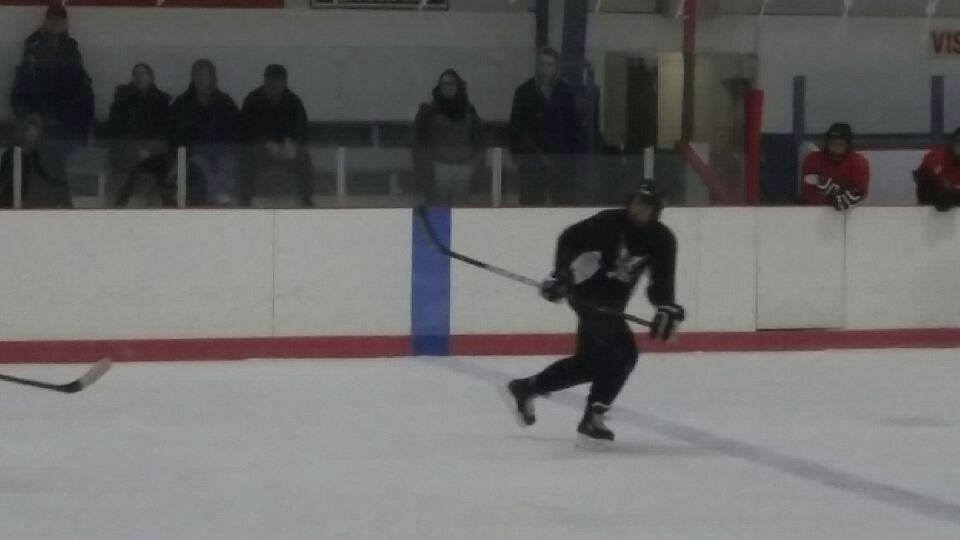
Evan Lions skates down at Frankford arena during a regular season game this year. Photo courtesy of Evan Lions
By Angus Argyle
BELLEVILLE – Evan Lyons, a 16-year-old from Frankford, Ont. has been playing hockey since he was five, and likes to play a physical game.
He says body checking should be introduced at a younger age than is currently allowed, like it used to be.
“The year that I was going into hitting they cut it out because some kid got absolutely destroyed,” said Lyons. “The mother flipped out on the league.”
The Ontario Minor Hockey Association raised the age limit at which body checking was allowed in 2013 due to concerns that young players were suffering too many concussions and injuries.
Lyons says he thinks that minor hockey leagues should gradually teach kids how to body check, starting at a younger age.
“You should start learning how to hit in novice. Then once you get to atom you implement it in practices and then once you get to peewee you can use it. It should start in peewee,” he said.
Lyons says he believes that inexperienced bantam age players who are just learning to hit, are going to cause more injuries than if they were to start at a younger age.
Lyons’s older brother Brett, who’s 21, has watched his brother and cousins progress through minor hockey. He agrees with his younger brother saying that the late introduction is turning kids away from playing.
“There’s kids who are hitting their peak a lot later or who have maybe been playing house league for a few extra years. Then they go to play rep and they don’t make the team based on their physical ability that way and not their hockey skills.
Brett says he thinks if body contact was introduced at a younger age kids would have a more equal playing field when they reach a more competitive level of play.
“Once you get to bantam… there are kids that are five foot and kids that are six foot, so a lot of those smaller kids you see quit,” he said. “You don’t see them play the same game they did previously.”
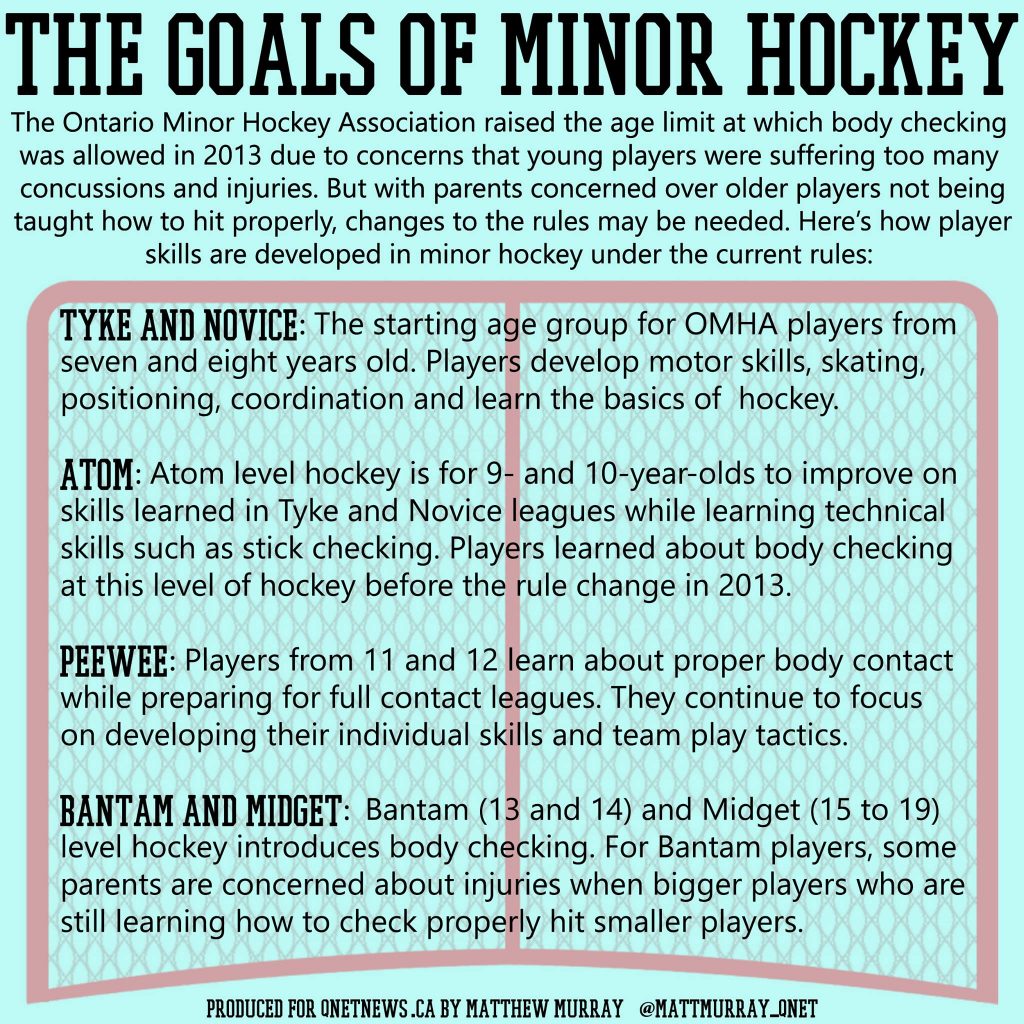
The Ontario Minor Hockey Association currently classifies skills to age level using a chart similar to this.
 Print This Post